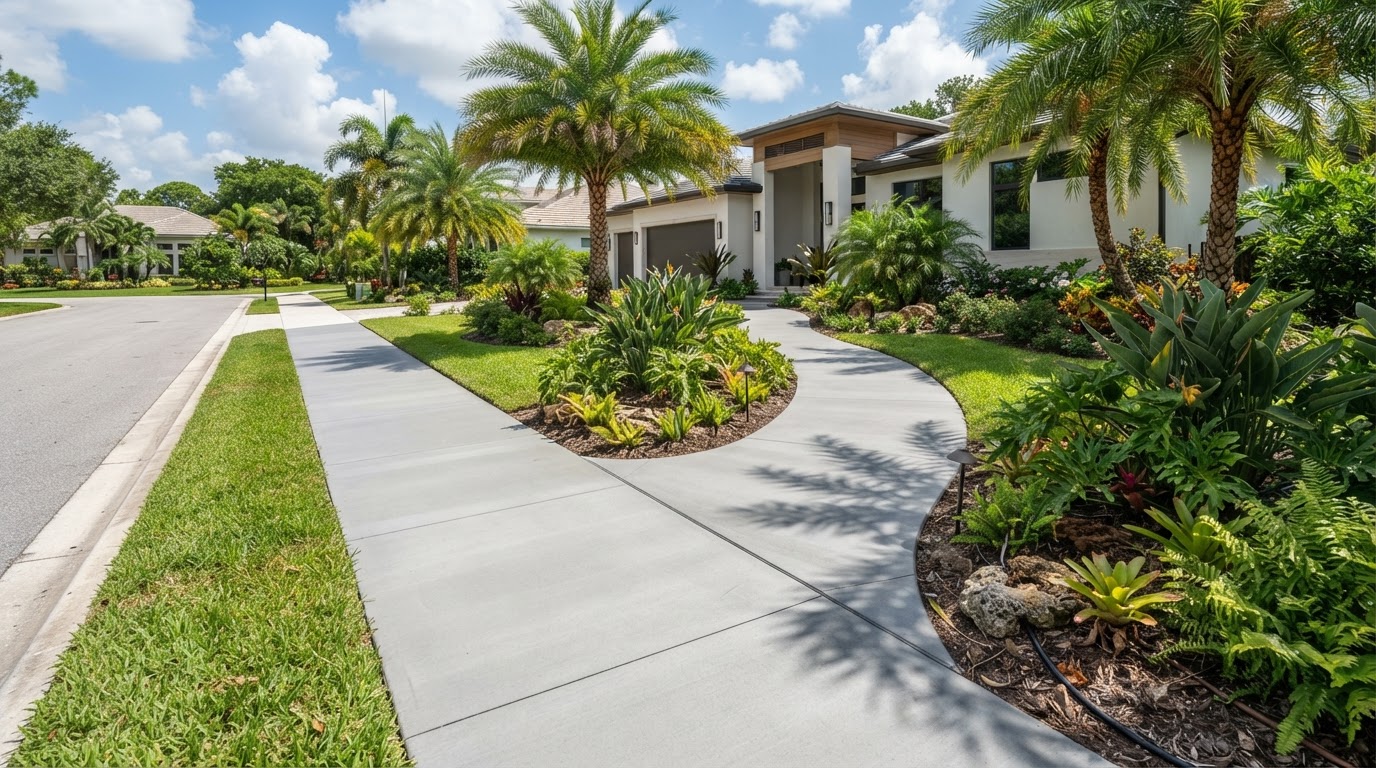
Tampa Concrete Walkways That Bring the Whole Property Together
A well-placed walkway can make the entrance more welcoming, the backyard easier to enjoy and the spaces between them feel like they were always meant to connect.
The path should feel like part of the property, not an afterthought.
Make It Easier to Move From One Part of the Property to the Next
A walkway should do more than fill the distance between two places. It should make the route feel obvious, comfortable and connected to the home and landscape around it.
That may mean leading from the driveway to the front door, connecting a patio with the pool, creating a cleaner route through the garden or giving people a defined way to reach a gate, garage or backyard feature.
New City plans concrete walkways around where people actually need to go, how the path meets adjoining surfaces and how water moves through the property. The finished route should feel like it belongs there rather than something added afterward.
What this service can include
- New poured-concrete walkways
- Routes connecting entrances, driveways, patios and outdoor spaces
- Straight, curved or gently changing layouts where the property allows
- Broom, decorative or stamped finishes where appropriate
- Removal and replacement of damaged walkway sections
- Planning around drainage, grades and adjoining concrete
A Better Path Can Make the Whole Property Feel Easier to Use
A More Welcoming Entrance
Create a defined route from the driveway or front yard to the main entrance so arriving at the home feels clear and intentional.
Cleaner Outdoor Connections
Connect patios, pools, gardens, garages and gathering areas without forcing people across lawn, mulch or improvised routes.
More Comfortable Daily Movement
Plan the width, turns and surface around the people who will actually use the path every day.
A More Finished Landscape
Use the walkway to define planting areas, organize outdoor zones and help the property feel more deliberately connected.
A walkway should be planned around its actual use and property conditions. Do not imply that any walkway automatically eliminates every trip, fall or accessibility concern.
Plan the Path Around Where People Actually Need to Go
The most useful walkway starts with its destinations. A direct route may make sense for a formal front entrance, while a softer curve may fit better through a garden, around landscaping or between backyard features.
The path should feel intentional without adding unnecessary distance, awkward turns or difficult transitions.
Starting and Ending Points
Identify the entrances, parking areas, patios, gates or outdoor features the walkway needs to connect.
Width and Passing Space
Plan the width around normal use, expected foot traffic and any project-specific clearance requirements.
Curves and Direction Changes
Use turns that fit the property and remain comfortable to follow instead of adding curves only for decoration.
Elevation Transitions
Coordinate the walkway with doors, driveways, patios, steps and surrounding grades so connections do not create abrupt or poorly drained edges.
Landscaping and Roots
Consider trees, root zones, planting beds, irrigation and future growth before deciding where the route should go.
Lighting and Surrounding Features
Allow for existing or planned lighting, gates, railings, downspouts and other features that influence how the walkway is used.
Before the concrete goes in, look at the route from beginning to end. A good walkway should not finish with an awkward gap, narrow pinch point or unexplained change in elevation.
Choose a Finish That Helps the Walkway Feel Like Part of the Property
A walkway can sit quietly within the landscape or become a more noticeable design feature. Texture, color, pattern and edge treatment can help connect the path visually with the home, driveway, patio or surrounding landscaping.
The finish still has to make sense for the way the walkway will be used and maintained.
Broom-Finished Concrete
A practical textured finish for homeowners who want a clean, understated walkway that works comfortably with the surrounding property.
Stamped and Decorative Concrete
Pattern and color can give the walkway more visual character and help connect it with a decorative patio, driveway or entrance.
Exposed Aggregate
Visible aggregate adds texture and visual variation while creating a distinctive outdoor concrete surface.
Borders and Joint Layout
Contrasting borders and planned joint patterns can help organize the route visually without requiring a completely different paving system.
Available colors, patterns, aggregates and finishing systems should be confirmed for the individual project. Poured concrete, segmental pavers and natural stone are different systems and should not be presented as interchangeable.
A Good Walkway Still Has to Work With Tampa Weather
Tampa walkways spend much of the year exposed to strong sun, humidity and periods of heavy rain. The route, elevations and surrounding grades should help water move away instead of collecting in low areas or washing soil away from the edges.
Slope also affects how the walkway feels underfoot. The appropriate elevation changes depend on the property, intended use and any project-specific requirements rather than one universal number.
Finish and color choices can also affect how the surface looks and feels in direct sun.
Surface Drainage
Set elevations so water can move toward an appropriate discharge area without creating unnecessary problems at entrances or adjoining surfaces.
Edge Support
Prepare and restore the material beside the walkway so repeated rain does not easily wash away an unsupported edge.
Surface Texture
Choose a texture that balances appearance, maintenance and traction. Do not describe any outdoor concrete surface as completely slip-proof.
Heat and Exposure
Color, finish and direct sun can influence surface temperature and appearance. Do not promise that outdoor concrete will remain cool in every condition.
Build the Walkway Around the Route From the Beginning
A new walkway gives you the opportunity to solve the route before concrete is placed. The layout should account for where the path begins and ends, surrounding grades, turns, width and how it meets driveways, patios, steps, doors or outdoor features.
Once the route is established, the supporting area, formwork, reinforcement, joints, placement and finish can be planned around the approved scope and actual property conditions.
The details at each connection matter. Even a well-finished walkway can feel incomplete if it meets another surface awkwardly or leaves water trapped between elevations.
- Confirm the route and final connections
- Establish width, curves and elevations
- Prepare the supporting area
- Coordinate reinforcement and control joints where required
- Place and finish the concrete
- Protect the work and provide return-to-use instructions

Universal thickness, reinforcement, strength, joint spacing and curing times should not be published. Those details depend on the project, property and applicable requirements.
Fix the Walkway Without Ignoring Why It Failed
Cracks, settlement, lifted sections, broken edges and standing water can make an existing walkway harder to use and less attractive.
The right response depends on whether the problem is isolated and stable or connected to continuing movement, drainage, roots or lack of support.
Before deciding between repair, section replacement or a larger route correction, it helps to understand what caused the problem in the first place.
Focused Repair
A small isolated crack, joint or damaged area may be worth repairing when the surrounding concrete and supporting conditions remain suitable.
Section Replacement
A broken, displaced or unsupported panel may be better replaced when rebuilding that section creates a more dependable connection with the remaining path.
Route Correction
A larger change may be worth discussing when the existing path repeatedly collects water, follows an awkward line or connects poorly with entrances and surrounding surfaces.
Tree roots and lifted sections
Roots can lift nearby concrete and create uneven joints. The tree, root area and amount of movement should be considered before grinding, patching or replacing the section. Do not claim New City provides arborist services or direct tree removal without appropriate review.
Low areas and settlement
A low section may collect water and debris or create an abrupt transition. Repairing only the surface may not address missing support or continuing settlement below it. Evaluate the cause before choosing leveling, partial replacement or a revised route. Learn more about concrete repair.
Different Parts of the Property Need Different Kinds of Connections
A front entrance does not serve the same purpose as a garden path, pool connection or route to a backyard gate. The right walkway should respond to where people are going and what surrounds the path along the way.
Front Entrances
Create a recognizable route from the driveway or front yard to the primary entrance.
Side and Rear Access
Provide a defined path to gates, garages, utilities, backyards or service areas.
Patios and Pool Areas
Connect outdoor living spaces while coordinating elevations, drainage and finishes with the surrounding concrete.
Garden and Landscape Paths
Guide movement through planting areas while considering curves, roots, irrigation and maintenance access.
Garages, Sheds and Backyard Features
Create a practical route to the places homeowners regularly use without forcing movement across wet grass, loose soil or improvised paths.
Courtyards and Outdoor Gathering Spaces
Connect seating areas and adjoining features with a path planned around normal foot traffic and landscape maintenance.
Set the Route Before the Concrete Goes In
Review the Route
Identify where the walkway begins and ends, how it will be used and the entrances, patios, driveways, gates or landscape features it needs to connect.
Confirm Layout and Elevations
Set the width, curves, transitions and drainage relationship with surrounding grades and adjoining concrete.
Prepare the Supporting Area
Remove material as required and prepare support appropriate to the conditions found on the property and the approved project scope.
Set Forms, Reinforcement and Joints
Establish the edges and final grade, then install reinforcement and planned joints where required for the project.
Place and Finish the Concrete
Place the concrete and apply the selected broom, decorative or other approved finish while maintaining the planned elevations and connections.
Protect and Review the Work
Protect the curing surface, restore affected edges and provide project-specific guidance for foot traffic, cleaning and maintenance.
Do not state that every project uses every material or step. Do not publish fixed technical specifications or universal return-to-use timing.
What Shapes the Cost of a Concrete Walkway in Tampa?
Walkway pricing depends on more than length and width. Curves, access, removal, elevation changes, drainage, site preparation and the way the new path connects with existing surfaces can all affect the work required.
Finish also matters. A straightforward broom-finished path and a decorative walkway with borders, color or detailed pattern work can involve very different scopes.
The most useful estimate comes after the full route, property conditions and finish choices have been reviewed.
Let's Talk About Your Project- Total walkway area
- Straight, curved or complex layout
- Excavation and base preparation
- Access for labor, equipment and concrete placement
- Removal and disposal of existing material
- Drainage and elevation transitions
- Broomed, decorative, stamped or exposed-aggregate finish
- Steps, borders and connections to existing concrete
Protect the New Walkway and Keep Water Moving Where It Should
Return-to-use timing depends on the concrete, finish, weather and project conditions. Follow the project-specific instructions provided for the installed walkway rather than relying on one universal curing schedule.
Keep soil, mulch and plant growth from covering the edges or blocking the intended drainage path. Redirect downspouts or concentrated irrigation when they repeatedly wash material away from the concrete.
Clean the surface using methods appropriate to the finish and any protective treatment. Watch for changing elevations, widening cracks, standing water or edge erosion so developing conditions can be evaluated before they affect a larger portion of the route.
Do not expect a fixed lifespan or maintenance-free surface.
Questions About Concrete Walkways in Tampa
What Parts of the Property Would You Like to Connect?
Show us where people need to go, what the walkway should connect and how the surrounding areas are used. We can look at the property and talk through the route, finish and next step.
Other concrete work that connects with a walkway project
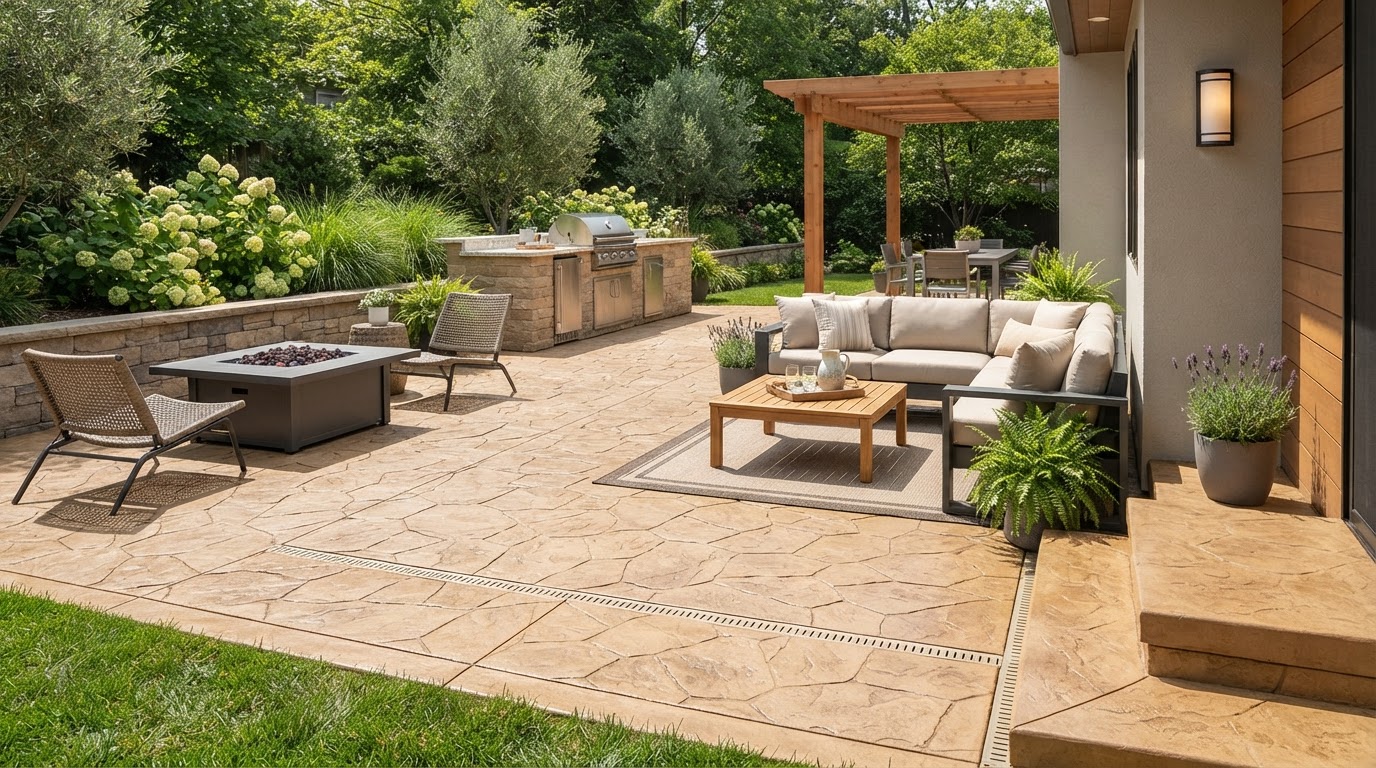
Stamped & Decorative Concrete
Stamped, colored and patterned finishes that coordinate a walkway with patios, driveways and entrances.
Stamped & Decorative ConcreteConcrete Patios
Custom concrete patios designed for outdoor living, planned around grade, drainage and finish.
Concrete Patios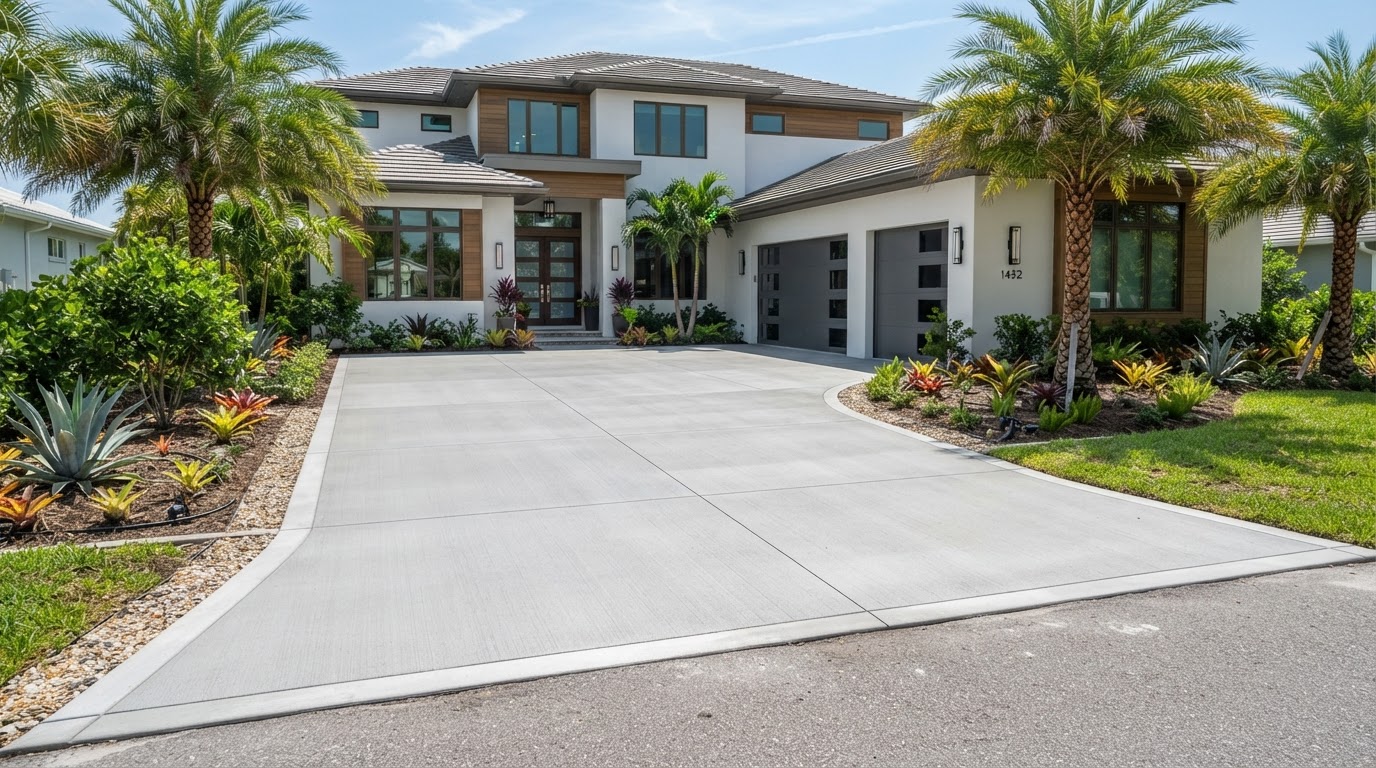
Concrete Driveways
New, replacement and resurfaced concrete driveways planned around access, drainage and finish.
Concrete Driveways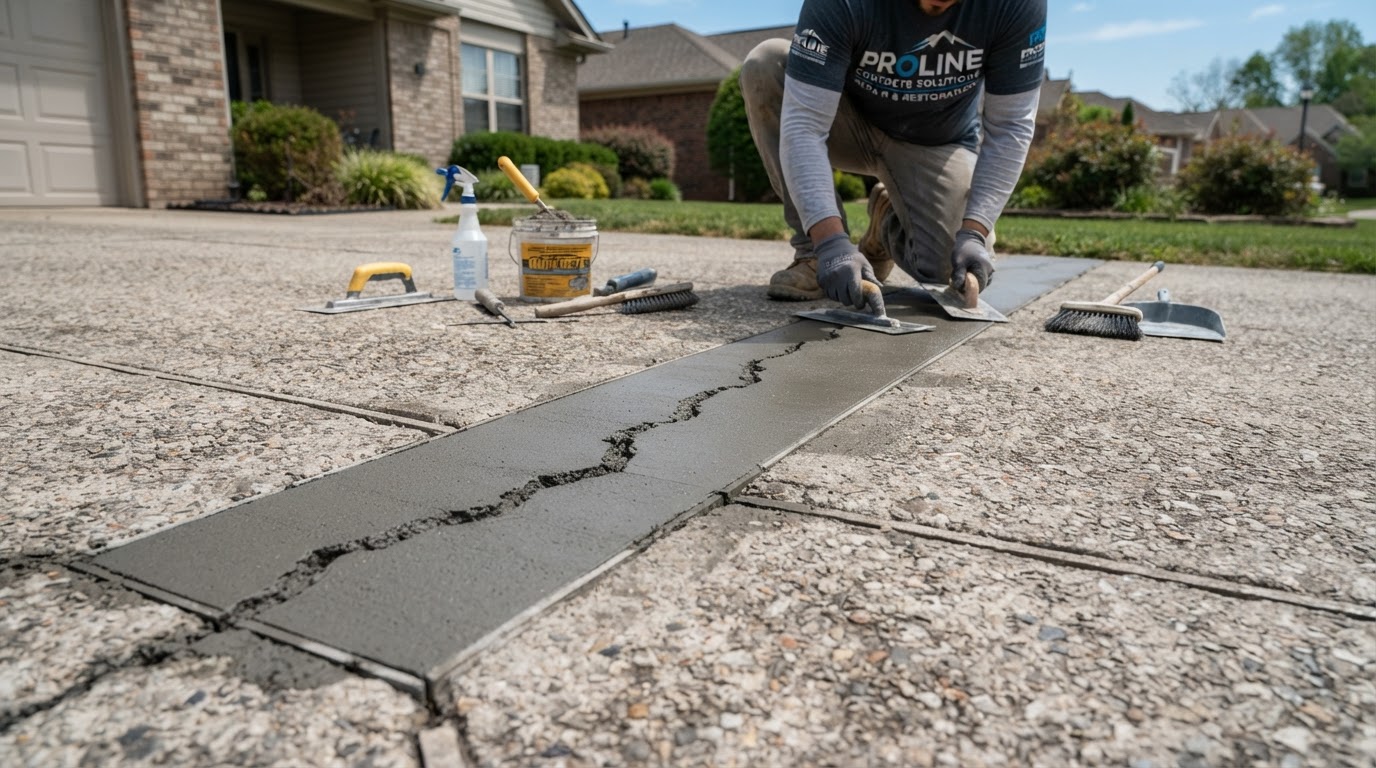
Concrete Repair
Crack repair, patching, joint repair and section replacement for damaged concrete paths and slabs.
Concrete Repair